
「いち、に、の…」で待つふれあい遊び
- 人間関係・社会性
- 言語・コミュニケーション
2〜3歳|1回 5〜10分
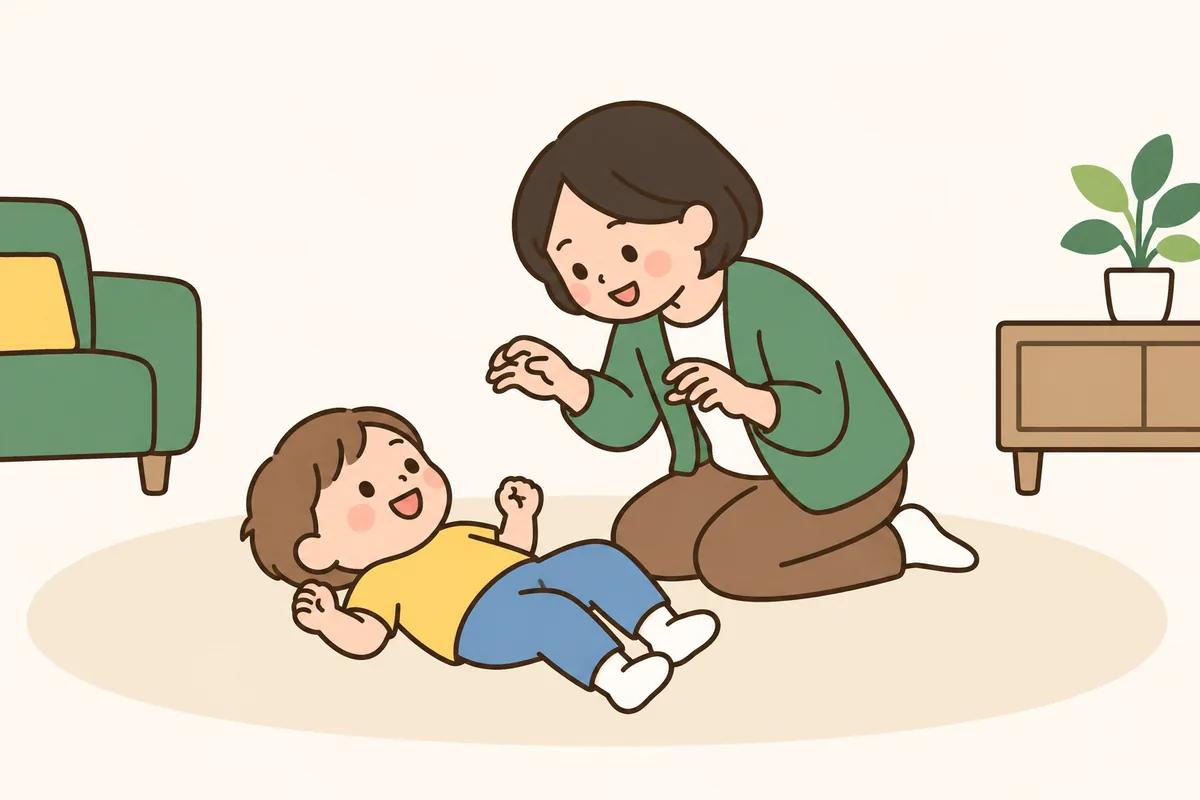
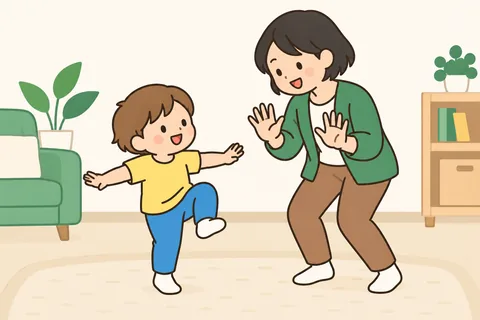
くすぐりやいないいないばあなど、体を使ういつもの遊びを、毎回同じ流れでくり返します。流れを覚えたら、いちばん楽しいところの手前(「いち、に、の…」)で止めます。子どもが目や声で「もっと」と伝えてくるのを待ちます。
着替えのときにくすぐる。お風呂上がりに、タオルでいないいないばあをする。毎日のちょっとした場面で遊べます。支援の場でも、着替えの途中のくすぐりのような、ごく単純で先の読める流れから始めます9。おもちゃを使わないので、子どもの目が大人の顔に向きやすい遊びです4。
大人がすることは、流れをいつも同じにすることと、楽しいところの手前で止めて待つことです。待っているあいだに、子どもがこちらを見たり、笑ったり、体を揺らしたりしたら、それが「もっと」の合図です1。ことばが出ていなくても、その合図に応えて続きをします。
好きな物を手の届かない所に置いて、子どもが求めるのを待つ工夫もあります。この遊びでは、物ではなく、体を使った遊びの流れの中で待ちます。
期待すること

療育での使われ方
- 自閉症の幼児の支援の方法のひとつでは、保護者に教える10項目のひとつが、体を使ったやりとり遊びでした。日本の医療機関での実践でも、いないいないばあなどを組み込んでいました。78
- イギリスの公的医療機関や、ことばの発達を支える団体が、「人と遊ぶ遊び」として家でのやり方を保護者に伝えています。135
- 自閉症の幼児への支援の方法を研究者がまとめた報告では、こうした遊びをごく単純で先の読める流れから始め、期待して待つなどの工夫を組み合わせます。ふだんの生活に組み込む支援や保護者が行う支援は、アメリカの報告で、自閉症の子どもへの根拠のある実践とされています。910
支援の方法全体
- 自閉症の幼児への支援の方法で、この遊びはその一部
- 研究をまとめると、人とやりとりする力に小さめの効果
- どちらの組の子か知らない人が評価すると、はっきりした差はない
保護者が行う短い形
- 保護者が週1時間・12週の指導を受けて行う
- 地域のふだんの支援と比べて、差がなかった
- どちらの組の子どもも伸びていた
8歳未満の自閉症の子どもの支援研究のまとめ(2023年)と、自閉症の可能性がある1歳2か月〜2歳の子ども98人をくらべたアメリカの研究(2012年)より。
用意するもの
- いないいないばあに使う布やタオル(なくてもよい)
遊び方
- 子どもが喜ぶ体の遊びを1つ選ぶ。くすぐり、いないいないばあ、追いかけっこ、ブランコを押す、など126
おもちゃを使わず、大人と子どもの2人で遊べるものにします。
- 毎回同じ始め方・同じことば・同じ動きで、最後まで何度も通して遊ぶ35
「くすぐるぞー」と言って両手を上げる、のように始まりの合図を決めます。
- 流れを覚えたら、いちばん楽しいところの手前で止めて待つ。「いち、に、の…」「よーい…」など1356
身を乗り出し、期待した顔で見つめて、子どもの番だと知らせます。
- 子どもが見る・笑う・声を出す・体を動かす・ことばを言うなどしたら、子どもの番として受け取り、すぐに続きをする13
- 毎回同じ終わり方で終える(「おしまい」)35
やさしくする
- 止めずに、最後まで通して何度も遊ぶ
- 目を向ける、体を揺らすなど、ことば以外の合図も「もっと」として受け取る
むずかしくする
- 子どもの番を「もっと」「ドン」などのことばにする
- 子どもが遊びを始めたり、終えたりできるようにする
- 役を交代して、子どもがくすぐる側・隠れる側になる
止める目安
- 目をそらす・顔をそむけたら「やめて」の合図として受け取り、そこで止める
- 泣く、体を押し返すなど嫌がるときは、すぐにやめる
気をつけること
- 研究の多くは、アメリカで、自閉症かその可能性がある1〜3歳ごろの子どもに行われたものです。調べたのは支援の方法全体で、この遊びだけの効果や、ほかの子どもでの効果はわかっていません
- 触られるのが苦手な子には、いないいないばあや追いかけっこなど、体に触れない遊びを選びます
あわせて試せる工夫

関連する困りごと
出典
People Games. Whittington Health NHS Trust, Islington Additional Needs and Disability Service(IANDS。英国の公的医療の発達支援サービス), 2025-09-10. 「What are they?」「How to do them」「Remember」
People Games. Whittington Health NHS Trust, Islington Additional Needs and Disability Service(IANDS。英国の公的医療の発達支援サービス), 2025-09-10. 「10 ideas for making your interactions fun」
How to work on play skills and interaction. Gloucestershire Health and Care NHS Foundation Trust(英国の公的医療機関の配布資料。組織名は掲載ドメインによる). 6.2 How to play People Games「Ideas for people games」(PDF 3枚目)
How to work on play skills and interaction. Gloucestershire Health and Care NHS Foundation Trust(英国の公的医療機関の配布資料。組織名は掲載ドメインによる). 6.2 How to play People Games「Important tip」「How to play people games」(PDF 2〜3枚目)
How to work on play skills and interaction. Gloucestershire Health and Care NHS Foundation Trust(英国の公的医療機関の配布資料。組織名は掲載ドメインによる). 6.2 How to play People Games「Target」「In people games children can learn to」(PDF 2枚目)
Brockman, D.. Toying with People Games: Help Parents Get Interactions Going. The Hanen Centre(ことばの発達支援の団体), 2026-08-11. SPARK の各節(Start the same way each time、Plan the child's turn、Adjust the routine、Repeat the same actions, sounds and words、Keep the end the same)
CDC's Developmental Milestones. Centers for Disease Control and Prevention(米国疾病予防管理センター), 2026-02-17. 2歳のページ(Tips and activities)
Rogers, S. J.、Estes, A.、Lord, C.、Vismara, L.、ほか. Effects of a Brief Early Start Denver Model (ESDM)–Based Parent Intervention on Toddlers at Risk for Autism Spectrum Disorders: A Randomized Controlled Trial. Journal of the American Academy of Child and Adolescent Psychiatry, 51(10), 1052–1065, 2012. Method「Treatment Condition」
Tateno, Y.、Monden, R.、Kumagai, K.、Tateno, M.. Effectiveness of the Early Start Denver Model (ESDM) as an early intervention for young children with autism spectrum disorder in clinical settings in Japan: A non-randomized controlled trial. PCN Reports, 5(2), e70340, 2026. METHODS「ESDM intervention in this study」
Schreibman, L.、Dawson, G.、Stahmer, A. C.、Landa, R.、Rogers, S. J.、ほか. Naturalistic Developmental Behavioral Interventions: Empirically Validated Treatments for Autism Spectrum Disorder. Journal of Autism and Developmental Disorders, 45(8), 2411–2428, 2015. 「Nature of the Development-Enhancing Strategies」「Environmental Arrangement」「Balanced Turns Within Object or Social Play Routines」
Steinbrenner, J. R.、ほか. Evidence-Based Practices for Children, Youth, and Young Adults with Autism. UNC Frank Porter Graham Child Development Institute, National Clearinghouse on Autism Evidence and Practice, 2020. Table 3.1(p.28〜29)、p.95「Naturalistic Intervention」、p.99「Parent-Implemented Intervention」
Sandbank, M.、Bottema-Beutel, K.、Crowley LaPoint, S.、ほか. Autism intervention meta-analysis of early childhood studies (Project AIM): updated systematic review and secondary analysis. BMJ, 383, e076733, 2023. Abstract、Results「Estimated effects from randomized controlled trials」と続く2節、表2
Rogers, S. J.、Estes, A.、Lord, C.、Vismara, L.、ほか. Effects of a Brief Early Start Denver Model (ESDM)–Based Parent Intervention on Toddlers at Risk for Autism Spectrum Disorders: A Randomized Controlled Trial. Journal of the American Academy of Child and Adolescent Psychiatry, 51(10), 1052–1065, 2012. Abstract(Results)