
怒ると、なかなか落ち着けない
2〜3歳、3〜5歳(園児)
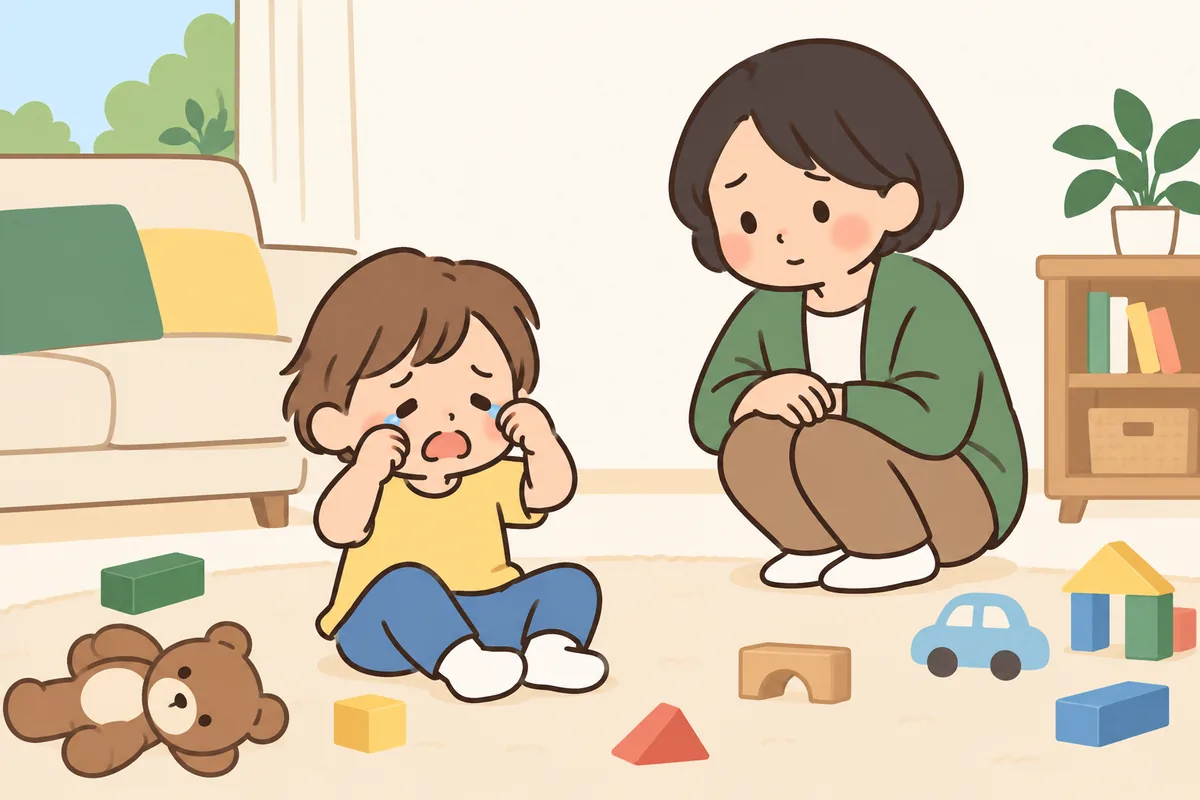
思いどおりにならないと、泣いたり怒ったりして、なかなかおさまらない。声をかけても、だっこしようとしても、しばらく落ち着けない。
かんしゃくは幼い子にはよくあることで、1〜3歳ごろにいちばん多いとされています1。3〜5歳の子の親への調査では、8割あまりの子が、過去1か月にかんしゃくを起こしていました。毎日だった子は、1割に届きませんでした7。「怒ると落ち着くのが難しい」ことも、半数あまりの子にありました8。
かんしゃくがどのくらい続くかは、研究によって数字がちがいます。多くが5分以内だった研究もあれば、健康な子の平均が11分あまりだった研究もあります9。調べ方や子どもによって幅が大きく、「何分ならふつう」とは決められません。
怒りは、始まってすぐがいちばん強いという研究があります。そのあとは、悲しさやなぐさめてほしい気持ちが強くなっていきます6。
最中は、安全を確かめて、説得せずにそばで待ちます。落ち着いてから、なぐさめたり話したりします10。気持ちのことばや落ち着き方は、ふだんの穏やかなときに少しずつ育てていきます11。
アメリカ・シカゴ周辺の小児科で募集した3〜5歳1,490人について、親が答えた結果(2012年の論文)より。半数あまりの子に、過去1か月に一度以上ありました。

ふだん
- 気持ちにことばをつける
- 疲れや空腹などのきっかけを見つけておく
- 大人が深呼吸して見せる
最中
- 安全を確かめる
- そばにいて気持ちをことばにする
- 説得せずに待つ
落ち着いたら
- なぐさめる
- 何があったかを話す
オーストラリアとアメリカの、幼児の保護者向けの情報より。
考えられる理由
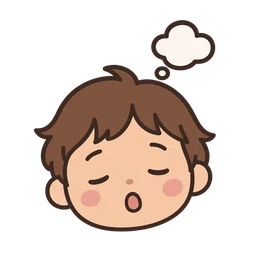
疲れているときや、おなかがすいているとき、人の多いにぎやかな場所では、落ち着きにくくなる4
気持ちの強さや反応の速さには、生まれ持った気質の違いがある5
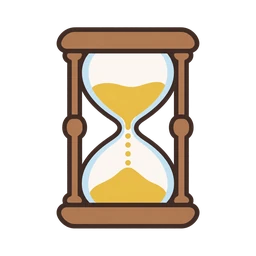
怒りは始まってすぐがいちばん強い。そのあとは、悲しさやなぐさめてほしい気持ちが強くなっていく6
試せる工夫
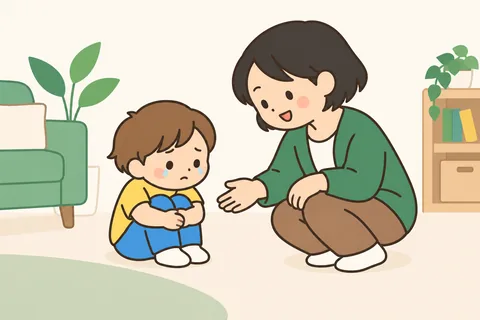
そばにいて、落ち着くのを待つ(タイムイン)
怒っている最中に、どう関わればよいか迷うとき
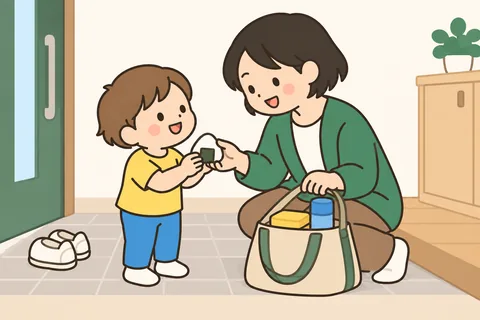
かんしゃくの前ぶれ(疲れ・空腹・人混み)に先回りする
夕方や外出先など、怒りやすい時間や場面がありそうなとき
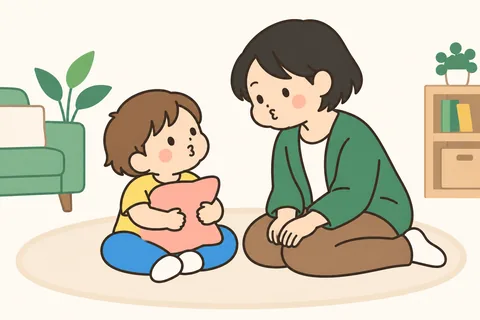
落ち着き方を、ふだんのうちに練習しておく
落ち着いているときに、気持ちのことばや落ち着き方を練習しておきたいとき
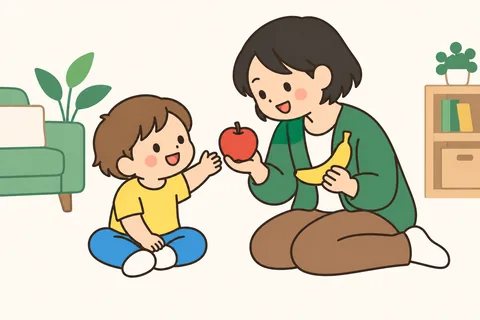
2つから選んでもらう
「やる・やらない」の言い合いから、怒りが大きくなりやすいとき
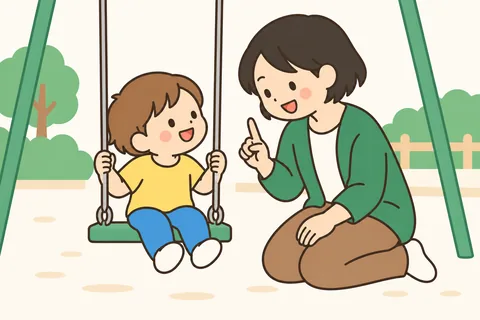
終わりを前もって伝える
遊びの終わりなど、切り替えの場面で怒りやすいとき
止める・変える目安
- 体に触れられると激しくなるときは、だっこをやめて、近くで見守るだけにする
- 大人のイライラが強くなってきたら、子どもの安全を確かめたうえで、大人が少し深呼吸する
- メモをつけるのが負担になったら、やめてかまわない
- 練習をいやがるときは、無理にさせず、大人が見せるだけにする
- 練習のたびにかんしゃくを思い出して怒るようなら、しばらくやめる
- 選ぶことが負担に見えるときは、大人が決めて伝える
- 伝えるたびに泣いたり怒ったりするときは、伝え方を変えるか、ほかの工夫を試す
出典
Toddler tantrums: why they happen & how to deal with them. Raising Children Network(オーストラリアの子育て情報サイト), 2026-07-24. 節「Why tantrums happen…」
Swanson, W. S.. Top Tips for Surviving Tantrums. HealthyChildren.org(米国小児科学会), 2021-04-21. 本文(かんしゃくは発達の一部で、1〜3歳に多いという記述)
Time-in: helping toddlers calm down. Raising Children Network(オーストラリアの子育て情報サイト), 2026-07-24. 節「Calming down: why young children need help」
Toddler tantrums: why they happen & how to deal with them. Raising Children Network(オーストラリアの子育て情報サイト), 2026-07-24. 節「Why tantrums happen…」
Temper tantrums. NHS(英国国民保健サービス), 2022-11-07. ページ冒頭の説明(話せるようになると減り、4歳ごろまでにずっと少なくなるという記述)
Manning, B. L.、Roberts, M. Y.、Estabrook, R.、ほか. Relations Between Toddler Expressive Language and Temper Tantrums in a Community Sample. Journal of Applied Developmental Psychology, 65, 101070, 2019. 抄録
Roben, C. K.、Cole, P. M.、Armstrong, L. M.. Longitudinal relations among language skills, anger expression, and regulatory strategies in early childhood. Child Development, 84(3), 891–905, 2013. 抄録
Calming down for children: how to help (3-8 years). Raising Children Network(オーストラリアの子育て情報サイト), 2026-07-24. 節「Calming down from strong emotions…」
Toddler tantrums: why they happen & how to deal with them. Raising Children Network(オーストラリアの子育て情報サイト), 2026-07-24. 節「Why tantrums happen…」
Temper tantrums. NHS(英国国民保健サービス), 2022-11-07. 見出し「Find out why the tantrum is happening」
Toddler tantrums: why they happen & how to deal with them. Raising Children Network(オーストラリアの子育て情報サイト), 2026-07-24. 節「Why tantrums happen…」
Calming down for children: how to help (3-8 years). Raising Children Network(オーストラリアの子育て情報サイト), 2026-07-24. 節「Calming down from strong emotions…」
Potegal, M.、Kosorok, M. R.、Davidson, R. J.. Temper tantrums in young children: 2. Tantrum duration and temporal organization. Journal of Developmental and Behavioral Pediatrics, 24(3), 148–154, 2003. 抄録
Wakschlag, L. S.、Choi, S. W.、Carter, A. S.、ほか. Defining the developmental parameters of temper loss in early childhood: implications for developmental psychopathology. Journal of Child Psychology and Psychiatry, 53(11), 1099–1108, 2012. 抄録、Results
Wakschlag, L. S.、Choi, S. W.、Carter, A. S.、ほか. Defining the developmental parameters of temper loss in early childhood: implications for developmental psychopathology. Journal of Child Psychology and Psychiatry, 53(11), 1099–1108, 2012. Table 1 項目18、Results
Potegal, M.、Kosorok, M. R.、Davidson, R. J.. Temper tantrums in young children: 2. Tantrum duration and temporal organization. Journal of Developmental and Behavioral Pediatrics, 24(3), 148–154, 2003. 抄録
Belden, A. C.、Thomson, N. R.、Luby, J. L.. Temper tantrums in healthy versus depressed and disruptive preschoolers: defining tantrum behaviors associated with clinical problems. The Journal of Pediatrics, 152(1), 117–122, 2008. Table 3(健康な子の群の平均。標準偏差12分16秒)
Calming down for children: how to help (3-8 years). Raising Children Network(オーストラリアの子育て情報サイト), 2026-07-24. 5つの手順(とくに手順4)
Time-in: helping toddlers calm down. Raising Children Network(オーストラリアの子育て情報サイト), 2026-07-24. 節「How to do time-in…」「After children have calmed down」
Toddler tantrums: why they happen & how to deal with them. Raising Children Network(オーストラリアの子育て情報サイト), 2026-07-24. 節「How to deal with…」
Toddler tantrums: why they happen & how to deal with them. Raising Children Network(オーストラリアの子育て情報サイト), 2026-07-24. 節「How to make toddler tantrums less likely」
Swanson, W. S.. Top Tips for Surviving Tantrums. HealthyChildren.org(米国小児科学会), 2021-04-21. 項「Set your child up for success」
Belden, A. C.、Thomson, N. R.、Luby, J. L.. Temper tantrums in healthy versus depressed and disruptive preschoolers: defining tantrum behaviors associated with clinical problems. The Journal of Pediatrics, 152(1), 117–122, 2008. Discussion
Wakschlag, L. S.、Choi, S. W.、Carter, A. S.、ほか. Defining the developmental parameters of temper loss in early childhood: implications for developmental psychopathology. Journal of Child Psychology and Psychiatry, 53(11), 1099–1108, 2012. 抄録(心配な形として、予測できない・長引く・壊すかんしゃくを挙げている)
Temper tantrums. NHS(英国国民保健サービス), 2022-11-07. ページ本文(深刻に心配なときの相談先の記述)