
待つのが苦手(レジの列・病院・料理が来るまで)
2〜3歳、3〜5歳(園児)
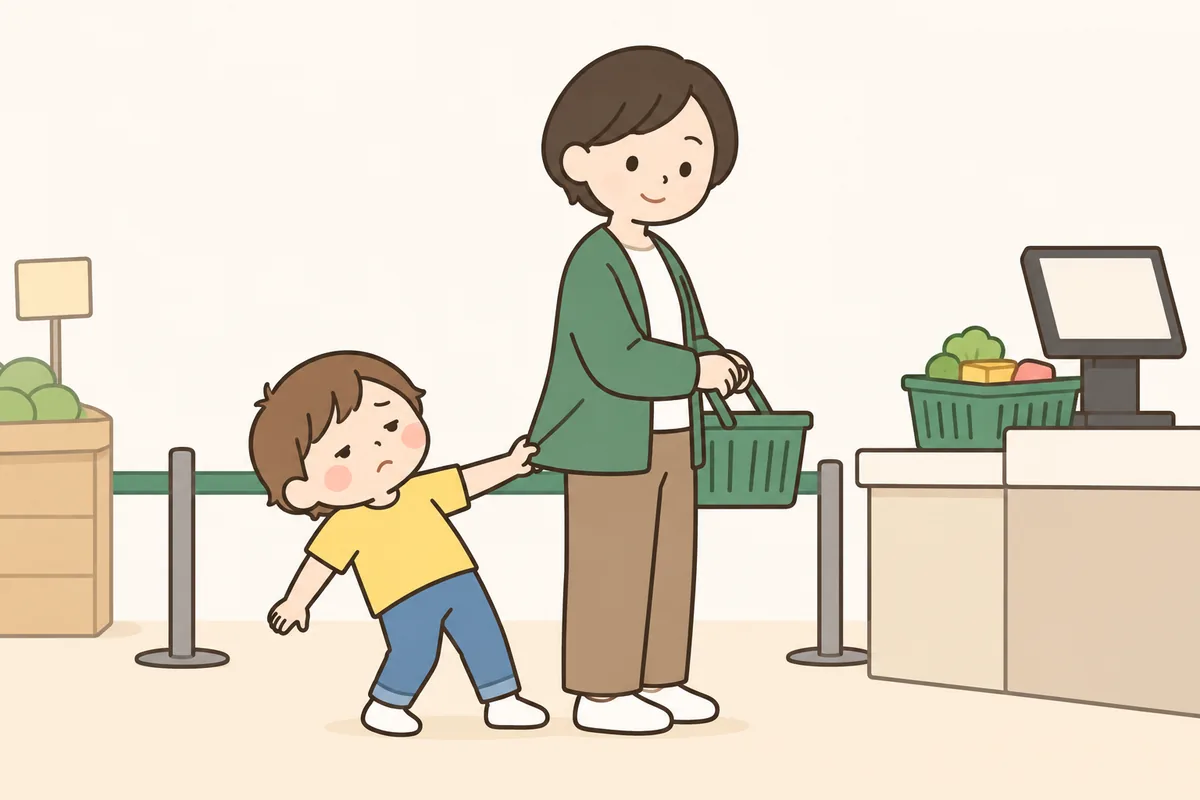
レジの列や病院の待合で、少し待つだけで「まだ?」とくり返す。ぐずったり、列から離れようとしたりする。お店では、料理が来るまでじっと待っていられない。
幼児は、食べ物やおもちゃを短い時間なら待てるようになります。その力は、小学校に上がるまでのあいだに大きく育つとされています1。
同じ子を1歳半から4歳まで追った研究があります。2歳ごろまでは、待ち始めてすぐに怒りが出やすいものでした。3歳ごろからは、怒る前に自分で気をそらすことが増えました2。4歳で怒りが出るまでの時間は、平均で4分半ほどです。子どもによる差は大きいものでした3。
待ちやすさは、そのときの状態や待ち方でも変わります。疲れているときは、気持ちを整えにくくなります。混んだにぎやかな場所が苦手な子もいます5。待っているものをじっと見るより、ほかのことで気をそらすほうが待ちやすいという実験もあります4。待つあいだは、まわりの物を探す遊びや、手でできることが助けになります1112。
日本とアメリカの4〜5歳を比べた研究では、日本の子は食べ物を、アメリカの子はプレゼントを長く待ちました7。この研究と、日本の4〜6歳の別の研究では、食べるのを待つ習慣がある子ほど、食べ物を長く待てました。ただ、プレゼントではそうした関係は見られず、ほかの場面に広がるかはわかっていません78。
「小さいころに待てるかどうかで将来が決まる」と言われることがあります。その後の研究では、4歳で待てた時間と学力の関連は小さいものでした。家庭の環境などを考えに入れると、さらに小さくなりました9。アメリカでは、今の子のほうが昔の子より長く待てていた、という報告もあります10。
お母さんの用事が終わるまで、包んだプレゼントを前に8分待つ課題です。論文の値を分に直しています。アメリカの経済的に余裕の少ない家庭の120人を、1歳半から4歳まで追った研究(2011年)より。
4〜5歳の日本の80人とアメリカの58人が、マシュマロとプレゼントを待った時間。上限は15分です。京都・大阪とコロラド州で行った研究(2022年)より。
考えられる理由


疲れていたり、体調がよくなかったり、いつもと流れが違ったりすると、気持ちを整えにくい。混んだにぎやかな場所が苦手な子もいる5

料理やお菓子など、待っているものをずっと見ていると、かえって待ちにくくなる4

「待てば本当に来る」という見通しで、待ちやすさが変わることがある。食べるのを待つ習慣がある子は、食べ物の場面で待ちやすいという研究もある68
試せる工夫
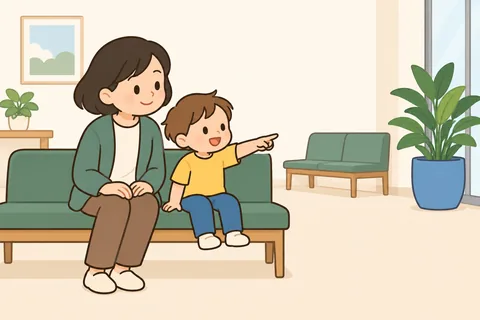
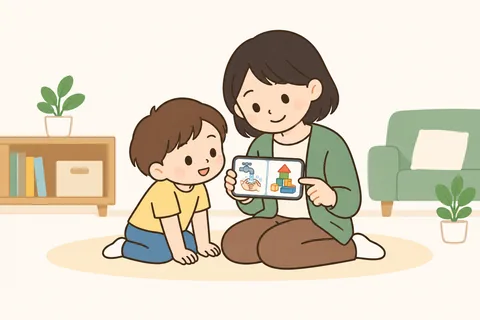
待つあいだに「見つけっこ」や手でできる遊びをする
レジの列や待合で、待つあいだの過ごし方に困るとき
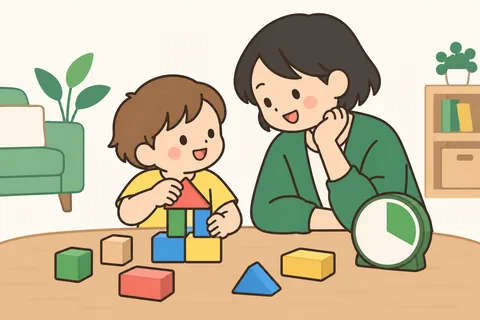
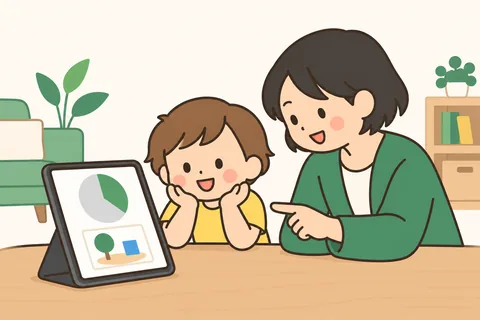
視覚タイマーで、残り時間を目で見せる
料理ができるまでなど、待つ時間がだいたいわかるとき
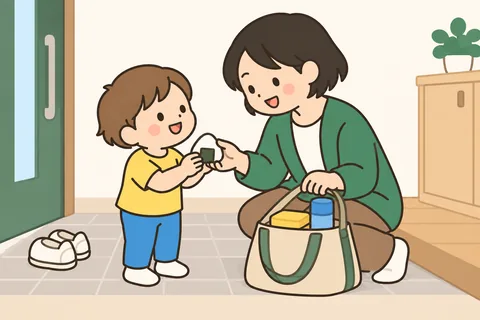
かんしゃくの前ぶれ(疲れ・空腹・人混み)に先回りする
夕方やおなかがすいたころに、待つ用事が重なりやすいとき
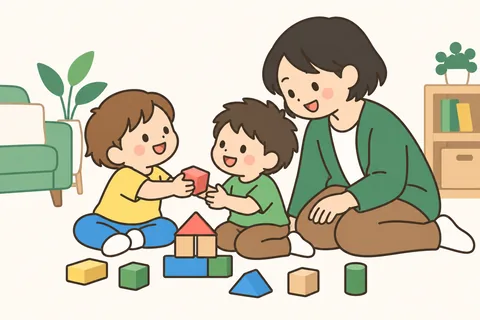
何がよかったかを、具体的にほめる
少しでも待てた場面を、ことばにして伝えたいとき
止める・変える目安
- 疲れやおなかがすいたことで崩れてきたら、遊びにこだわらず、いったん列や待合を離れる
- タイマーを見ると不安が強くなったり、泣いたりするときは、使うのをやめる
- 音が苦手な子には、音なしか、控えめな音にする
- メモをつけるのが負担になったら、やめてかまわない
- ほめられると照れて遊びが止まったり、嫌がったりするときは、声を小さく短くするか、あとで落ち着いたときに伝える
使えるツール
出典
Self-regulation in children & teenagers. Raising Children Network(オーストラリアの子育て情報サイト), 2025-03-12. 節「How does self-regulation develop?」
Cole, P. M.、Tan, P. Z.、Hall, S. E.、ほか. Developmental changes in anger expression and attention focus: learning to wait. Developmental Psychology, 47(4), 1078–1089, 2011. Abstract、Table 1・Table 2、Discussion
Cole, P. M.、Tan, P. Z.、Hall, S. E.、ほか. Developmental changes in anger expression and attention focus: learning to wait. Developmental Psychology, 47(4), 1078–1089, 2011. Table 1
Peake, P. K.、Mischel, W.、Hebl, M.. Strategic attention deployment for delay of gratification in working and waiting situations. Developmental Psychology, 38(2), 313–326, 2002. 抄録
Self-regulation in children & teenagers. Raising Children Network(オーストラリアの子育て情報サイト), 2025-03-12. 節「Problems with self-regulation」
Kidd, C.、Palmeri, H.、Aslin, R. N.. Rational snacking: young children's decision-making on the marshmallow task is moderated by beliefs about environmental reliability. Cognition, 126(1), 109–114, 2013. 抄録
Yanaoka, K.、Michaelson, L. E.、Saito, S.、Munakata, Y.. Waiting Longer With Less Work: The Impact of Habits and Social Trust on Children's Delay of Gratification. Developmental Science, 29(3), e70185, 2026. 抄録
Yanaoka, K.、Michaelson, L. E.、Guild, R. M.、ほか. Cultures Crossing: The Power of Habit in Delaying Gratification. Psychological Science, 33(7), 1172–1181, 2022. Results、Fig.1、Table 1
Yanaoka, K.、Michaelson, L. E.、Saito, S.、Munakata, Y.. Waiting Longer With Less Work: The Impact of Habits and Social Trust on Children's Delay of Gratification. Developmental Science, 29(3), e70185, 2026. 抄録
Watts, T. W.、Duncan, G. J.、Quan, H.. Revisiting the Marshmallow Test: A Conceptual Replication Investigating Links Between Early Delay of Gratification and Later Outcomes. Psychological Science, 29(7), 1159–1177, 2018. 抄録
Carlson, S. M.、Shoda, Y.、Ayduk, O.、ほか. Cohort effects in children's delay of gratification. Developmental Psychology, 54(8), 1395–1407, 2018. 抄録
Essentials for Parenting Toddlers and Preschoolers: Structure and Rules. Centers for Disease Control and Prevention(米国疾病予防管理センター), 2026-04-30. 見出し「Create consistent routines」
Self-regulation in children & teenagers. Raising Children Network(オーストラリアの子育て情報サイト), 2025-03-12. 節「Behavioural self-regulation strategies」と、「Emotional self-regulation strategies」のあとのほめ方の段落