
予定が変わると混乱する・いつもと違うと嫌がる
2〜3歳、3〜5歳(園児)、6〜8歳(小学校低学年)
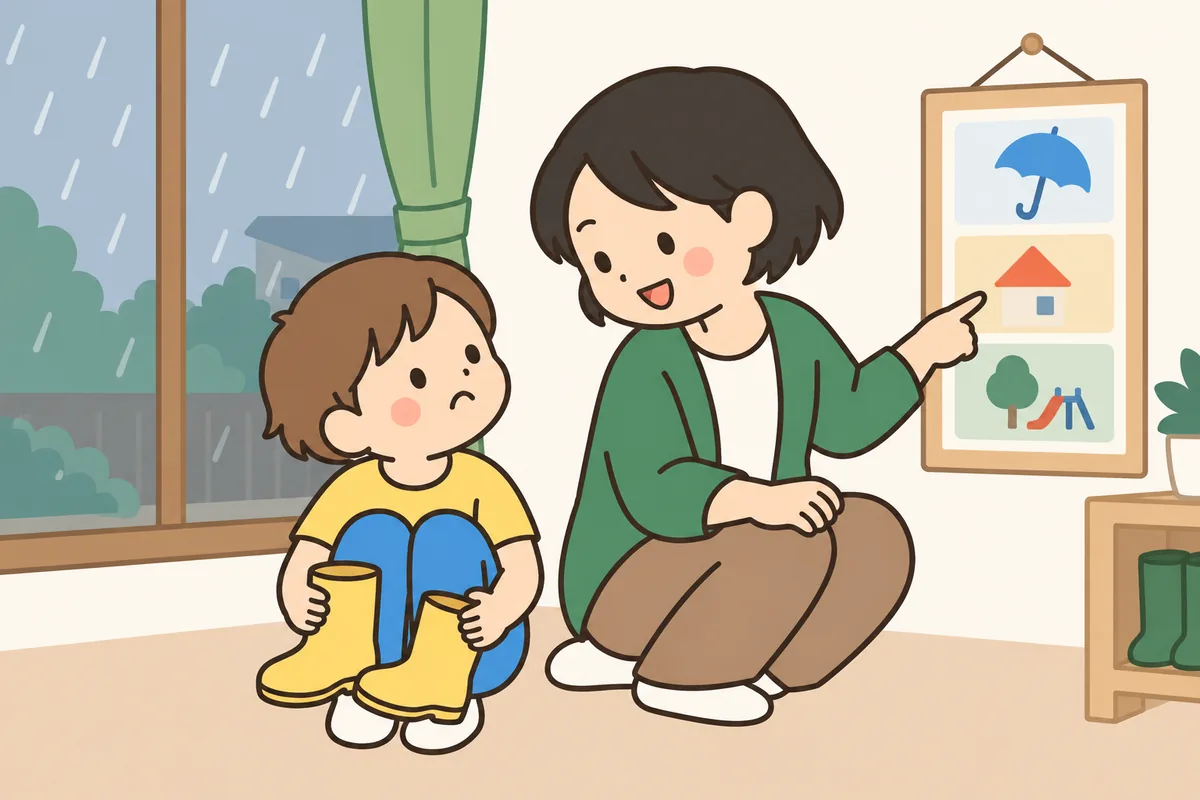
雨で公園に行けなくなった。いつもと違う道を通った。順番が入れ替わった。そんなとき「いやだ」と泣いたり怒ったりして、なかなか次に進めない。
「いつもと同じがいい」は、幼い子によくある姿です。決まった順番や同じやり方へのこだわりは、2〜4歳ごろに多いと報告されています1。変化への慣れやすさには、気質の違いもあります。慣れにくい子は、決まった流れを好み、驚かされるのが苦手です23。決まった流れは、子どもの安心につながります4。一方で、予定が変わることも暮らしの一部です5。
嫌がる理由には、先が読めないことと、楽しみがなくなることの2つがあるとされています6。先が読めないことが原因なら、前もって伝えたり、一日の流れを絵で見せたりする方法が向いています712。
楽しいことを終える場面では、予告だけでは泣くことが減らなかった研究があります。泣いても予定は変えずに、落ち着いて移れたらほめる関わりで、泣くことが減りました8。ただし、2〜3人の子の研究です。
変わることを伝えるのは、泣いている最中ではなく、落ち着いているときです。理由と、今日だけなのかを伝えます9。時刻より、「お昼のあと」のような区切りで伝えます。変えることは、一度に一つずつにします10。がっかりしているときは、「残念だね、どうしようか」と一緒に考えます13。乗り切れたら、具体的にほめます11。

先が読めない
- 一日の流れを絵で見せておく
- 変わることを前もって伝える
- 時刻より「お昼のあと」のような区切りで伝える

楽しみがなくなる・好きなことを終える
- 落ち着いているときに、理由と「今日だけか」を伝える
- 泣いても予定は変えずに、落ち着いて手伝う
- 次に進めたら、すぐにほめる
切り替えの研究のまとめと指針(主に知的障害や発達障害のある人が対象)、アメリカの幼児2人の研究、アメリカとオーストラリアの保護者向けの情報より。
考えられる理由

試せる工夫
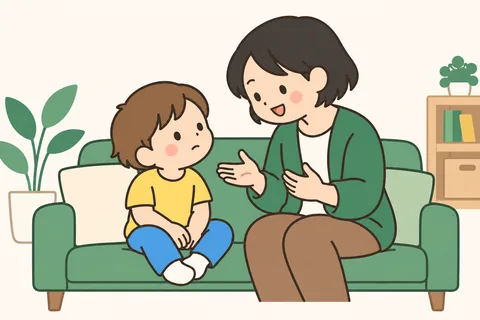
予定が変わることは、落ち着いているときに伝える
予定が変わることが、前もってわかっているとき

絵カードで、予定や手順、伝えたいことを見せる
一日の流れを絵で見せて、変わるところはカードを差し替えて見せたいとき
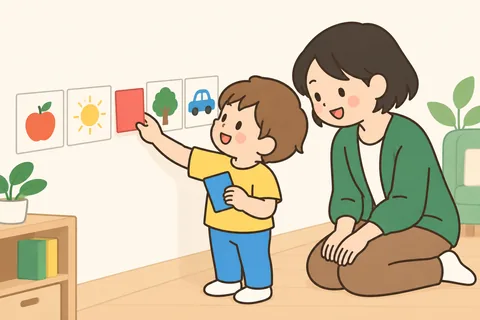
「かわります」カードで、予定の変更に少しずつ慣れる
急な変更が多く、「変わることもある」に少しずつ慣れたいとき
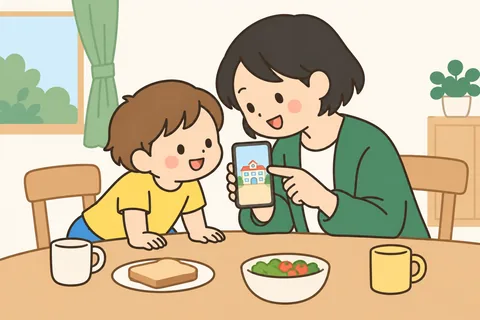
行く場所や会う人を、前もって話しておく
来客や行事、初めての場所など、いつもと違う一日になるとき
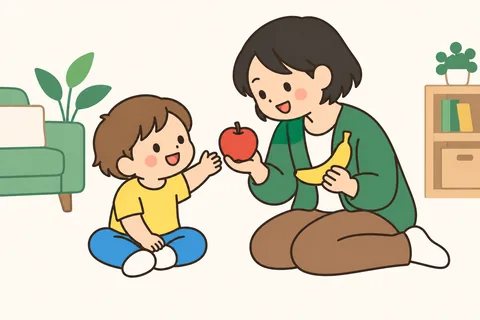
2つから選んでもらう
楽しみがなくなってがっかりしているとき(代わりにすることを2つから選ぶ)
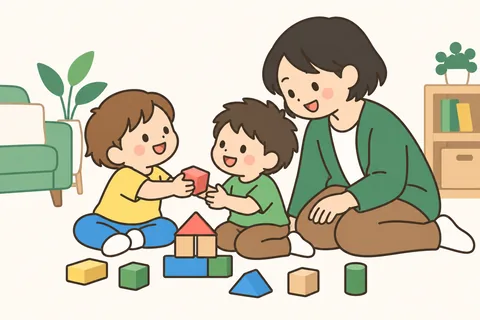
何がよかったかを、具体的にほめる
予定が変わっても次に進めたことを、ことばにしてほめたいとき
止める・変える目安
- 話すたびに強く泣くときは、説明を短くして、落ち着くまでそばで待つ
- カードを見せると嫌がったり、不安が強くなったりするときは、いったんやめる
- カードに頼りすぎて、ほかのやりとりが減っていないか、ときどき見直す
- カードを出すたびに強く嫌がるときは、カードのところで楽しいことが起きる段階に戻す
- 練習のために、急な変更をわざと何度も作らない
- 前もって話すと不安が強くなり、何度も確かめるようなら、短く1回伝えるだけにする
- 選ぶことが負担に見えるときは、大人が決めて伝える
- ほめられると照れて遊びが止まったり、嫌がったりするときは、声を小さく短くするか、あとで落ち着いたときに伝える
使えるツール
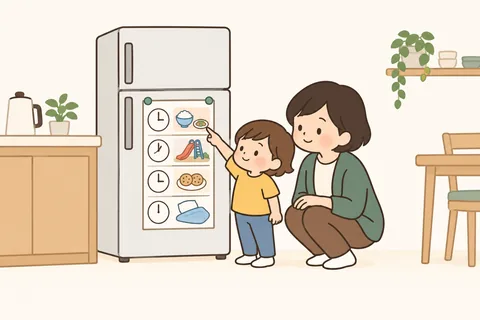
スケジュール絵カード
一日の予定を、いつ・なにを・どこで・だれとのカードで並べて見せる。印刷もできる
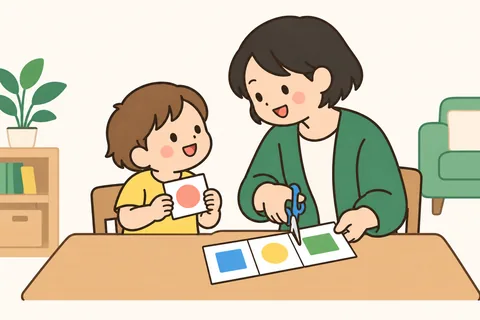
絵カードメーカー
予定や手順、伝えたいことを絵カードにする。印刷もできる
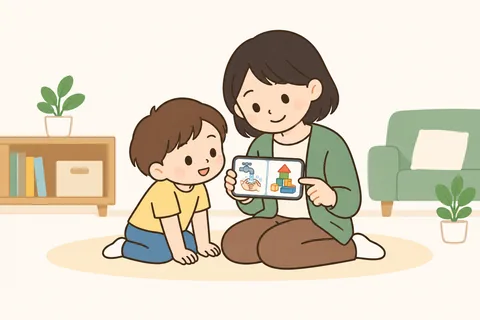
まず/つぎボード
「まずすること」と「つぎにすること」を2枚のカードで見せる
出典
Evans, D. W.、Leckman, J. F.、Carter, A.、Reznick, J. S.、Henshaw, D.、King, R. A.、Pauls, D.. Ritual, habit, and perfectionism: the prevalence and development of compulsive-like behavior in normal young children. Child Development, 68(1), 58–68, 1997. 抄録
Zohar, A. H.、Felz, L.. Ritualistic behavior in young children. Journal of Abnormal Child Psychology, 29(2), 121–128, 2001. 抄録
Temperament in babies & children: what it is & why it matters. Raising Children Network(オーストラリアの子育て情報サイト), 2026-09-11. 見出し「Adaptable」「Less adaptable」
Routines for families: how & why they work. Raising Children Network(オーストラリアの子育て情報サイト), 2025-11-11. 見出し「Why are routines good for children?」
Jiron, A.、Brogle, B.、Giacomini, J.. How to Help Your Child Transition Smoothly Between Places and Activities. National Center for Pyramid Model Innovations(Backpack Connection Series。TACSEI 作成、米国教育省 特殊教育プログラム局の資金による), 2018-01. 「The Bottom Line」
Routines & positive behaviour for children. Raising Children Network(オーストラリアの子育て情報サイト), 2024-10-01. 「Creating routines…」「Getting children to follow routines」の節
Kim, J. Y.、Ravichandran, V.、Moeyaert, M.、Ditzler, H.、Ryan, M.、Fienup, D. M.. Interventions for Transition-Related Challenging Behavior in Individuals with Disabilities: A Targeted Research Synthesis and Meta-Analysis of Studies Published in Behavior Analytic Journals. Behavior Modification, 50(3), 212–247, 2026. Abstract、Introduction
Brewer, A. T.、Strickland-Cohen, K.、Dotson, W.、Williams, D. C.. Advance Notice for Transition-Related Problem Behavior: Practice Guidelines. Behavior Analysis in Practice, 7(2), 117–125, 2014. 「When Advance Notice is Recommended / Not Recommended」
Brewer, A. T.、Strickland-Cohen, K.、Dotson, W.、Williams, D. C.. Advance Notice for Transition-Related Problem Behavior: Practice Guidelines. Behavior Analysis in Practice, 7(2), 117–125, 2014. Key points(末尾の箇条)、「When Advance Notice is Recommended / Not Recommended」
Kim, J. Y.、Ravichandran, V.、Moeyaert, M.、Ditzler, H.、Ryan, M.、Fienup, D. M.. Interventions for Transition-Related Challenging Behavior in Individuals with Disabilities: A Targeted Research Synthesis and Meta-Analysis of Studies Published in Behavior Analytic Journals. Behavior Modification, 50(3), 212–247, 2026. Discussion、Implications
Wilder, D. A.、Chen, L.、Atwell, J.、Pritchard, J.、Weinstein, P.. Brief functional analysis and treatment of tantrums associated with transitions in preschool children. Journal of Applied Behavior Analysis, 39(1), 103–107, 2006. Method、Results and Discussion
Cote, C. A.、Thompson, R. H.、McKerchar, P. M.. The effects of antecedent interventions and extinction on toddlers' compliance during transitions. Journal of Applied Behavior Analysis, 38(2), 235–238, 2005. Abstract、Results
Essentials for Parenting Toddlers and Preschoolers: Structure and Rules. Centers for Disease Control and Prevention(米国疾病予防管理センター), 2026-04-30. 「Key points」、見出し「Communicate changes effectively」
How to help your autistic child cope with change. Raising Children Network(オーストラリアの子育て情報サイト), 2025-12-02. 見出し「Timetables and visual schedules」「Gradual change」
How to help your autistic child cope with change. Raising Children Network(オーストラリアの子育て情報サイト), 2025-12-02. 見出し「Reward flexibility」
Visual schedules & supports: autism. Raising Children Network(オーストラリアの子育て情報サイト), 2026-01-30. 「Who are…」「What are … used for?」の節
Brogle, B.、Jiron, A.、Giacomini, J.. How to Plan Activities to Reduce Challenging Behavior. National Center for Pyramid Model Innovations(Backpack Connection Series。TACSEI 作成、米国教育省 特殊教育プログラム局の資金による), 2018-01. 「Practice at School」
How to help your autistic child cope with change. Raising Children Network(オーストラリアの子育て情報サイト), 2025-12-02. 本文(苦手になりやすい変化の例)