
座っていられない・集中が続かない
2〜3歳、3〜5歳(園児)、6〜8歳(小学校低学年)
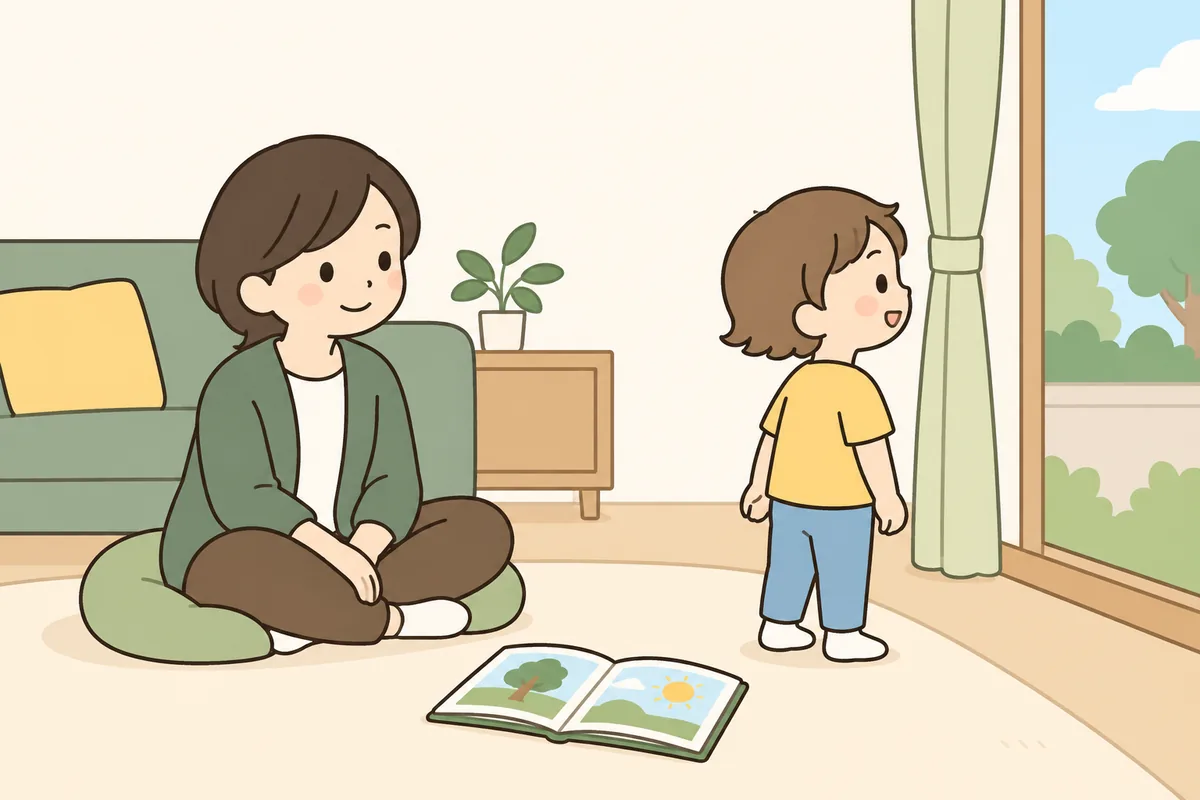
絵本を読んでいても、途中で立ち上がってしまう。お絵かきやパズルも、すぐに別のことを始めて続かない。
2〜3歳ごろはとても活発で、じっと座っていること自体が難しい時期です。もう少し大きくなると、座って絵本を聞けるようになります。それでも、疲れや空腹、友だちと一緒のときなどは、じっと座るのが難しいこともあります1。注意を向け続ける力は、小学校に上がるまでの数年で大きく育ちます2。
アメリカの目安では、5歳で、絵本や工作に5〜10分注意を向けていられることが挙げられています3。ただ、この数字は標準のデータにもとづくものではありません4。「何分座れればよい」と、1つの数字で決められるものではありません。
周りの様子でも、遊びの続き方は変わります。アメリカの実験では、背景でテレビがついているだけで、ひとつの遊びが続く時間が短くなりました。子どもは、テレビをほとんど見ていませんでした5。おもちゃは16個より4個のときのほうが、1つのおもちゃで長く遊んでいました6。どちらも少ない人数で、1回だけ見た実験です。続けると集中が育つかまでは、わかっていません。
疲れやおなかのすき具合、睡眠も関わります78。座る前に、体を動かすことも勧められています10。好きなことや、ちょうどよい難しさのものを選びます。短く、終わりがわかる量にします9。未就学児の小さな実験では、30分体を動かしたあとのほうが、注意を保ちやすかったと報告されています11。
絵本や工作などの時間で、画面を見る時間は数えません。新しく加わった項目で、標準のデータはありません。アメリカ疾病予防管理センターの発達の目安(その年齢の75%以上の子ができること)より。
長く続いた
- おもちゃが4個のとき
- 背景のテレビがついていないとき
短くなった
- おもちゃが16個のとき
- 背景で大人向けの番組がついていたとき
テレビは1〜3歳の50人、おもちゃの数は幼児36人で、どちらも1回の観察です。アメリカの実験より。
考えられる理由


していることが難しすぎたり、易しすぎたりする。好きなことではない9

試せる工夫
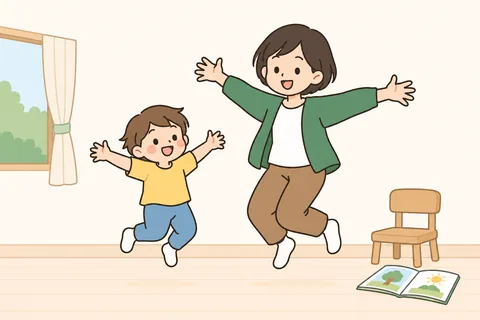
座る前に、体を動かす時間をつくる
座ってすることの前に、あまり体を動かしていないとき
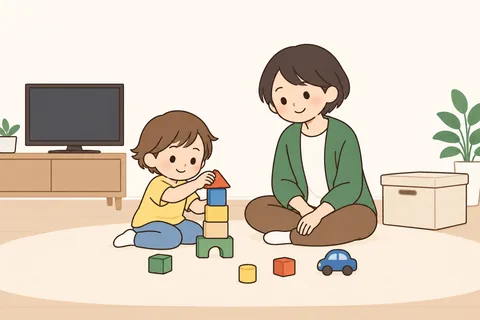
おもちゃは少しだけ出し、テレビは消す
おもちゃがたくさん出ていたり、テレビがついていたりする部屋で遊ぶとき
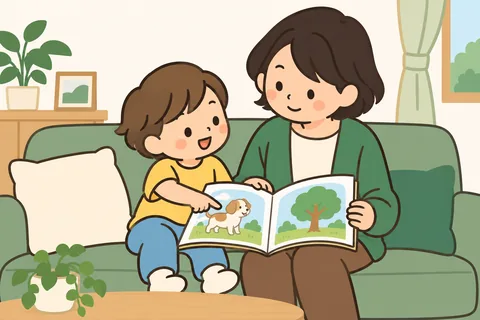
問いかけながら読む絵本(対話的な読み聞かせ)
絵本を聞いているだけだと、途中で離れてしまうとき
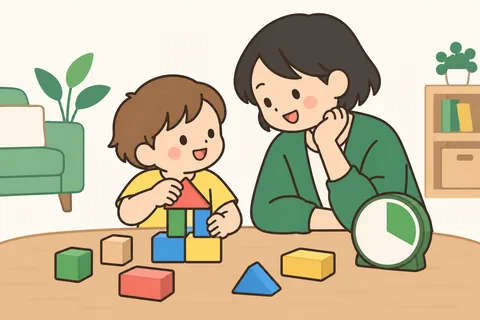
視覚タイマーで、残り時間を目で見せる
いつ終わるのかわからず、途中で立ち上がってしまうとき
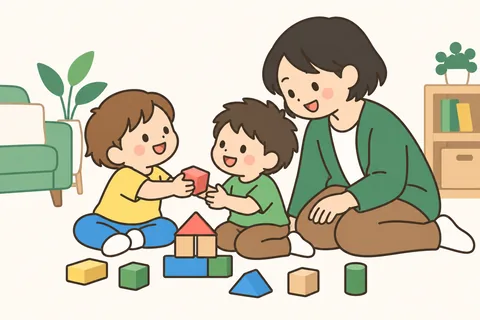
何がよかったかを、具体的にほめる
少しでも続けられたときに、何がよかったかを伝えたいとき
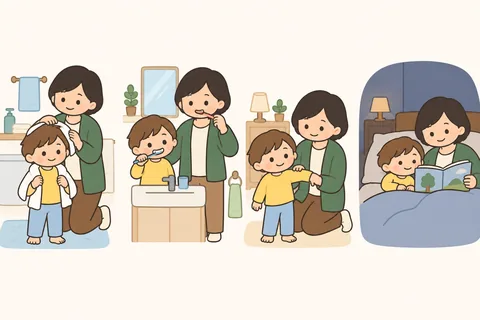
寝る前の流れを毎晩同じにする
寝る時刻がばらばらで、日中に疲れていそうなとき
止める・変える目安
- 疲れすぎて、かえってぐずるときは、体を動かす時間を短くする
- しまったおもちゃを強く欲しがって遊びにならないときは、その子が選んだものと入れ替える
- 問いかけが多すぎて、子どもが絵本を楽しめていないときは、ふつうに読むだけに戻す
- 子どもが先を読んでほしがっているときは、問いかけをやめて読み進める
- タイマーを見ると不安が強くなったり、泣いたりするときは、使うのをやめる
- 音が苦手な子には、音なしか、控えめな音にする
- ほめられると照れて遊びが止まったり、嫌がったりするときは、声を小さく短くするか、あとで落ち着いたときに伝える
- 流れどおりに進まない夜があっても、しかったり、最初からやり直させたりしない
家でできるあそび
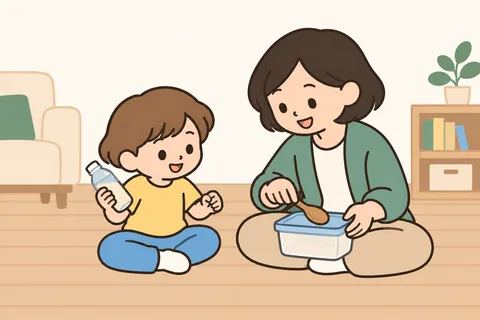
リズム遊び・手作り楽器
空き容器の太鼓やペットボトルのマラカスを鳴らして、大人と一緒にリズムを楽しむ遊びです。
使えるツール
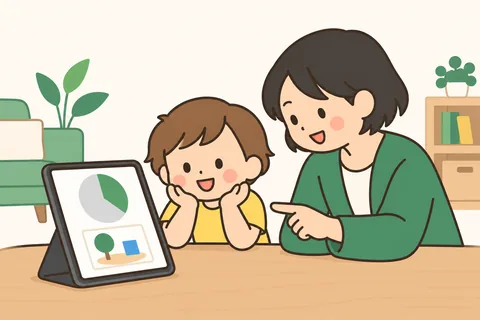
視覚タイマー
残り時間を目で見てわかる形にする
まず/つぎボード
「まずすること」と「つぎにすること」を2枚のカードで見せる
絵カードメーカー
予定や手順、伝えたいことを絵カードにする。印刷もできる
試したことの記録
試した工夫と、そのときのお子さんの様子を残す
出典
Play and Learning 5: Concentration and attention. Child and Adolescent Health Service – Community Health(西オーストラリア州政府), 2023-06. p.1(幼児と、それより大きい子の記述)
Mahone, E. M.、Schneider, H. E.. Assessment of attention in preschoolers. Neuropsychology Review, 22(4), 361–383, 2012. 本文(就学前の注意の発達についての記述)
CDC's Developmental Milestones. Centers for Disease Control and Prevention(米国疾病予防管理センター), 2026-02-17. 5歳のページ(Cognitive)と、目安の説明
Zubler, J. M.、Wiggins, L. D.、Macias, M. M.、ほか. Evidence-Informed Milestones for Developmental Surveillance Tools. Pediatrics, 149(3), e2021052138, 2022. Table 5(Cognitive)と脚注 d
Schmidt, M. E.、Pempek, T. A.、Kirkorian, H. L.、Lund, A. F.、Anderson, D. R.. The effects of background television on the toy play behavior of very young children. Child Development, 79(4), 1137–1151, 2008. 抄録
Dauch, C.、Imwalle, M.、Ocasio, B.、Metz, A. E.. The influence of the number of toys in the environment on toddlers' play. Infant Behavior and Development, 50, 78–87, 2018. 抄録
Play and Learning 5: Concentration and attention. Child and Adolescent Health Service – Community Health(西オーストラリア州政府), 2023-06. 本文(じっとしていにくい場面の記述)
Paruthi, S.、Brooks, L. J.、D'Ambrosio, C.、ほか. Recommended Amount of Sleep for Pediatric Populations: A Consensus Statement of the American Academy of Sleep Medicine. Journal of Clinical Sleep Medicine, 12(6), 785–786, 2016. 本文(推奨時間と、健康との関連)
Play and Learning 5: Concentration and attention. Child and Adolescent Health Service – Community Health(西オーストラリア州政府), 2023-06. 見出し「What you can do」
Play and Learning 5: Concentration and attention. Child and Adolescent Health Service – Community Health(西オーストラリア州政府), 2023-06. 見出し「What you can do」の1項目め
Palmer, K. K.、Miller, M. W.、Robinson, L. E.. Acute exercise enhances preschoolers' ability to sustain attention. Journal of Sport and Exercise Psychology, 35(4), 433–437, 2013. 抄録
Play and Learning 5: Concentration and attention. Child and Adolescent Health Service – Community Health(西オーストラリア州政府), 2023-06. 見出し「What you can do」